

Revolutionizing Construction & Civil Engineering with Virtual Reality: A Game-Changer in Project Planning
Revolutionizing Construction & Engineering: Enhancing Project Planning, Risk Management, and Collaboration with VR
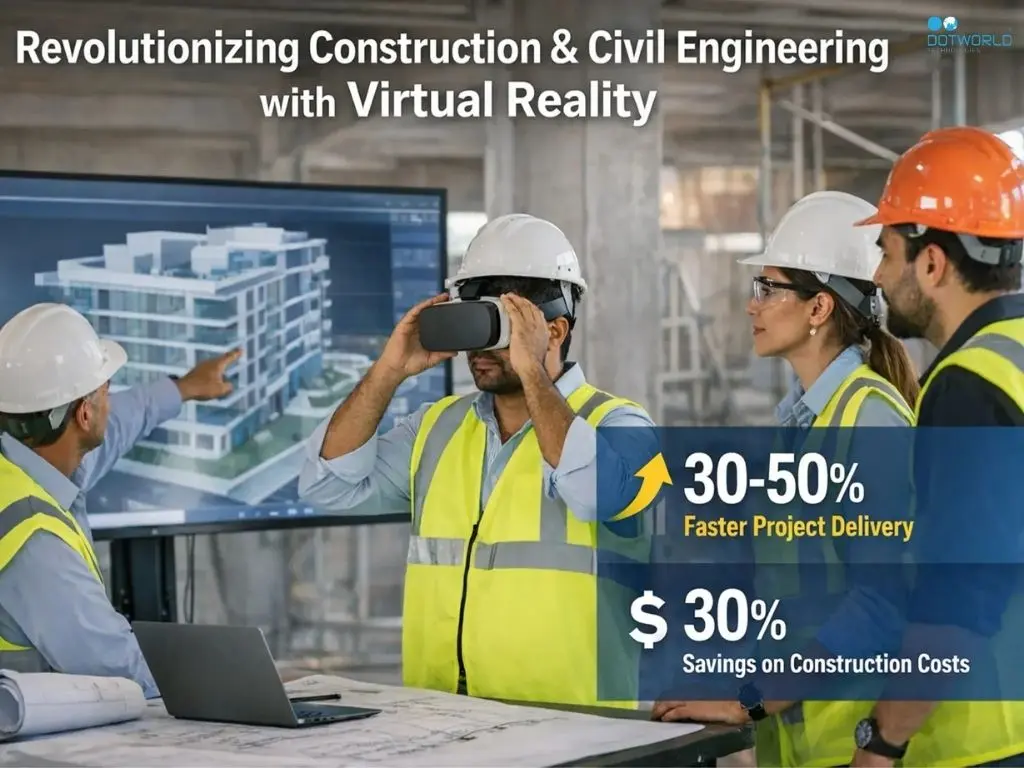
Table of Contents
Introduction:
In construction and civil engineering, traditional methods of project planning, site assessments, and risk management can be time-consuming and costly. Dotworld's AI-powered VR solutions offer an immersive, cost-effective alternative, transforming how construction projects are planned, executed, and managed. With virtual project planning, site walkthroughs, and risk simulations, VR technology not only reduces errors but also accelerates project timelines, improving collaboration and delivering measurable ROI.
With Dotworld's expertise, we've helped businesses across South India, Dubai, Singapore, USA, France, and Australia integrate VR solutions that streamline project delivery and ensure greater efficiency.
Dotworld’s VR Solutions for Construction & Civil Engineering Award-Winning Expertise:
Dotworld is recognized for its innovative VR solutions, transforming how construction teams plan, design, and assess risk, ensuring better safety and ROI.
Why VR is Essential in Modern Construction & Engineering
- Virtual Project Visualization
VR lets teams visualize projects in 3D, helping prevent costly design mistakes and ensuring better collaboration among architects and engineers.
- Virtual Site Walkthroughs
Virtual walkthroughs allow stakeholders to experience the site before construction begins, improving planning and reducing delays.
- Risk Assessment & Mitigation
VR enables teams to simulate real-world conditions (e.g., weather impacts, structural issues) to detect and prevent potential risks early in the project.
Challenges in Traditional Construction & How VR Addresses Them
1.Limited Project Visualization & Design Accuracy
VR Solution: 3D immersive visualizations help construction teams gain a full understanding of the project scope, preventing costly errors.
2.Employee Turnover & Expert Dependency
VR Solution: VR reduces reliance on experts by providing on-demand, expert-driven content, enabling faster training for new employees and improving overall team efficiency.
3.Ineffective Risk Assessment & Safety Protocols
VR Solution: Simulate real-world risks like structural weaknesses or weather disruptions in a virtual environment before they occur on-site.
The Key Advantages of Using VR in Construction & Civil Engineering
- Increased Efficiency
VR enhances planning, design, and execution by helping teams identify potential issues early and reducing rework
- Cost Reduction
VR cuts down on travel, material costs, and on-site errors, offering significant savings and making the process more efficient.
- Enhanced Team Collaboration
Virtual walkthroughs and real-time simulations enable teams to collaborate from different locations, making faster, more confident decisions.
The ROI Impact of VR in Construction & Civil Engineering
Problem:
Traditional methods of planning, assessing risks, and training are time-consuming, costly, and prone to errors.
VR Solution:
Dotworld's VR solutions streamline project planning, enhance collaboration, and simulate real-world conditions to improve project delivery and cost-efficiency.
Impact:
- 30-50% Faster Project Delivery
VR helps teams identify issues early, reducing rework and improving timelines.
- 30% Savings on Construction Costs
VR reduces costs related to travel, materials, and errors.
- Improved Risk Management & Safety
Simulations in VR help teams identify risks and safety hazards, reducing accidents on-site.
Conclusion:
VR technology is reshaping the construction and civil engineering industries by offering a cost-effective, immersive, and scalable solution for project planning, site walkthroughs, and risk assessments.
Dotworld leads the way in delivering AI-powered VR solutions that improve collaboration, reduce training time, and ensure measurable ROI.Sure! Here's a more concise version of the problem-based introduction: