

Mobile AR Expands From Games to Business Tools
Dec 15, 20253 min read
Argument RealityVirtual RealityMobile Application
Transforming Business with Mobile AR: From Customer Experience to Workplace Efficiency
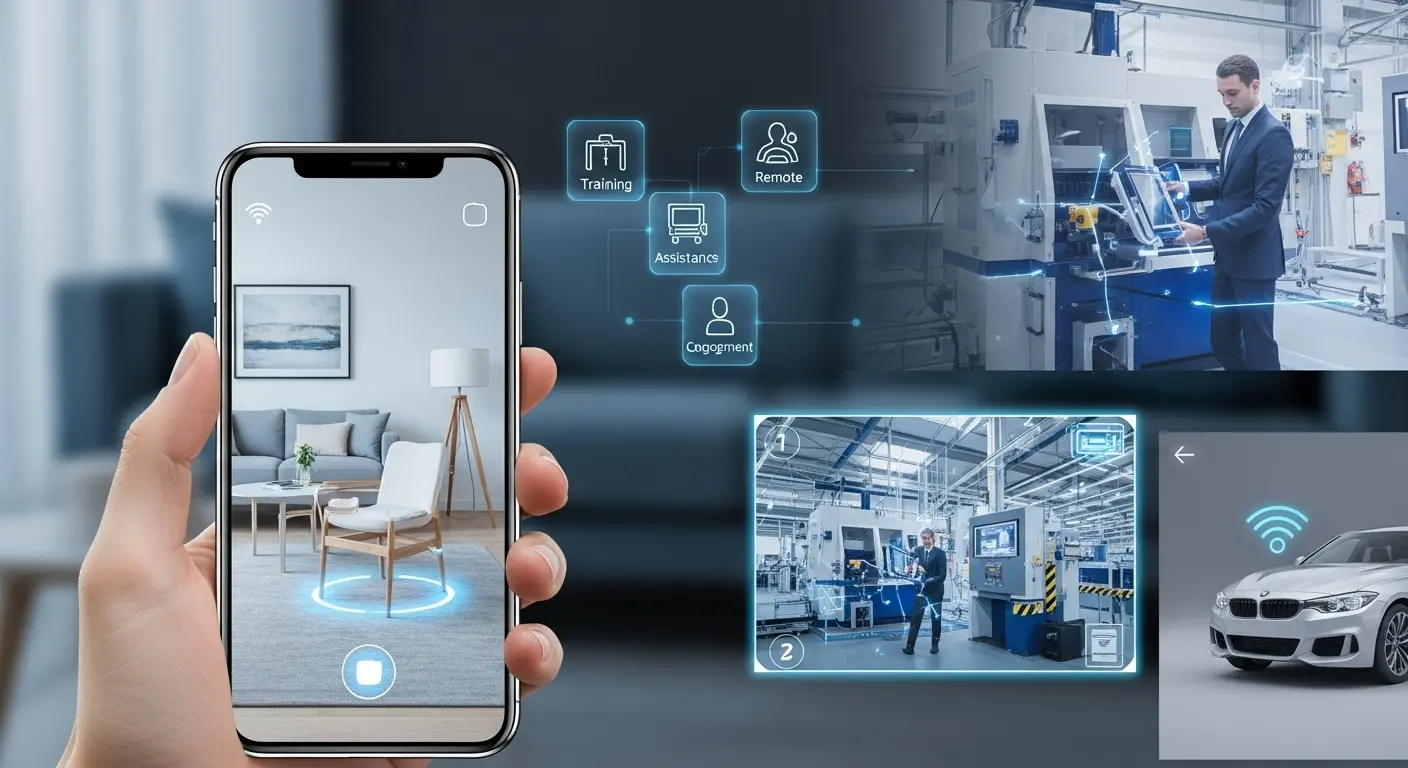
Table of Contents
Introduction
For years, Augmented Reality (AR) was seen as a fun gimmick for games and filters. Today, that same technology is the key to enterprise efficiency. Mobile AR is rapidly transitioning from entertainment to an indispensable business tool, redefining customer sales, streamlining complex workplace workflows, and providing real-time, hands-on training. It's transforming the smartphone in your pocket into a powerful lens for operational excellence and bottom-line growth.
From Play to Productivity
Mobile Augmented Reality (AR) is now a serious enterprise tool used to boost operational efficiency. Instead of just games, companies use AR apps on smartphones to overlay digital information onto physical objects. This is crucial in retail, allowing customers to visualize products (like furniture) in their homes, and in manufacturing, where workers see digital instructions layered directly onto equipment, which significantly reduces errors.
Upgrading Sales and Customer Experience
AR is revolutionizing marketing and sales by replacing static brochures with interactive, 3D product demonstrations. Businesses, ranging from car manufacturers to beauty brands, use AR to let customers virtually "try before they buy" directly on their phones. This deep level of engagement creates faster, more confident purchasing decisions, which directly increases conversion rates and customer satisfaction.
Redefining Training and Remote Support
One of the most critical business uses of Mobile AR is for employee guidance and support. AR apps deliver step-by-step instructions overlaid onto the real environment for complex tasks. Furthermore, remote experts can use AR to see what an on-site technician sees and digitally annotate the screen to provide instant, precise guidance. This saves money on travel, cuts training time, and ensures high quality across all teams.
Measuring the ROI and Future Impact
The core reason for AR adoption is its strong financial return on investment (ROI). AR significantly reduces training costs and dramatically lowers error rates in complex operational tasks. Its ability to boost sales conversions is also a major factor. The future of this technology involves a shift from smartphones to hands-free smart glasses, making AR the inevitable new operating system for the modern industrial and service workforce.
Conclusion: AR is Essential
Mobile Augmented Reality (AR) has transitioned from entertainment to a critical digital asset for businesses. It optimizes customer journeys, dramatically improves employee performance, and maintains a competitive edge. AR in the workplace is no longer futuristic—it is the present standard for operational excellence. Companies investing now are fundamentally transforming how they operate, sell, and train.